
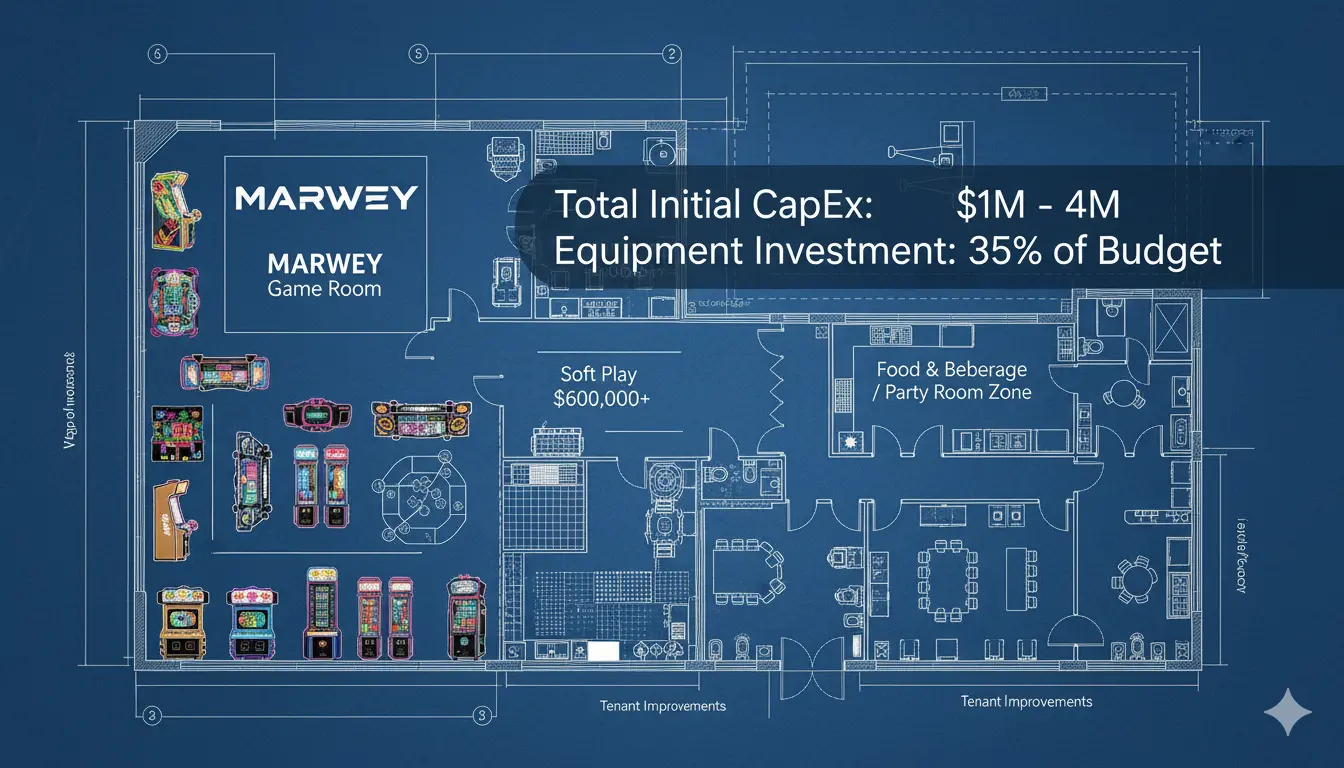

- The Spectrum of FEC Investment: Understanding the Variables
- Category 1: The Small-Scale / Niche Center
- Category 2: The Medium / Multi-Attraction Center
- Category 3: The Large / Anchor-Driven Entertainment Complex
- 🏦 The Four Pillars of FEC Capital Expenditure (CapEx)
- 1. Real Estate & Facility Build-Out (The Largest Variable)
- 2. Attraction and Equipment Investment (The Core Revenue Driver)
- 3. Food and Beverage (F&B) Infrastructure
- 4. Pre-Opening and Working Capital
- 📈 The Importance of Value-Driven Procurement with MARWEY
- Focus on ROI, Not Just Cost
- Optimization and Scaling
- Frequently Asked Questions (FAQ)
- 1. What is the typical start-up cost per square foot for an FEC?
- 2. Is it cheaper to buy or lease the FEC location?
- 3. How much should I budget for arcade and amusement equipment?
- 4. What is a "Feasibility Study," and is it necessary?
- 5. What are the key equipment costs MARWEY helps optimize?
- 6. Besides equipment, what is the largest unexpected cost for new FEC owners?
- 7. How long does it take to open an FEC from the initial planning stage?
The dream of opening a thriving Family Entertainment Center (FEC) is an exciting prospect, but the first and most critical hurdle is understanding the initial investment. The question, "How much does it cost to start a Family Entertainment Center?" does not have a single, simple answer; rather, it has a spectrum of possibilities defined by size, location, and the mix of attractions chosen.
In general, a small, laser-tag or soft-play focused FEC might require an initial capital outlay starting around $\$400,000$ to $\$750,000$, while a large, multi-attraction center featuring bowling, high-end arcades, and a full-service kitchen can easily exceed $\$5$ million to $\$10$ million.
The core principle of a successful FEC launch is strategic allocation of capital to areas that maximize long-term profitability and minimize operational headaches. As a dedicated provider of high-quality, high-return amusement equipment, MARWEY helps prospective owners navigate this complex budget landscape. Our expertise ensures that a significant portion of your investment—the crucial attraction mix—is optimized for durability, player appeal, and rapid return on investment (ROI), turning capital expenditure into reliable revenue generation.
This guide provides a structured, detailed breakdown of the major financial pillars required to launch your FEC successfully, ensuring your project is built on a solid financial foundation with MARWEY as your trusted equipment partner.
The Spectrum of FEC Investment: Understanding the Variables
Initial capital expenditure for an FEC is highly variable. It's often helpful to categorize FECs by size and ambition, as this defines the scale of the required budget.
Category 1: The Small-Scale / Niche Center
-
Size: 2,500 – 8,000 square feet.
-
Focus: Dominated by one or two main attractions (e.g., dedicated laser tag, inflatable center, or a pure arcade game room).
-
Estimated Investment Range: $\$200,000$ to $\$750,000$.
-
Cost Profile: Lower real estate and construction/build-out costs. The bulk of the budget goes into core equipment and essential utility upgrades.
Category 2: The Medium / Multi-Attraction Center
-
Size: 8,000 – 20,000 square feet.
-
Focus: A balanced mix of anchor attractions (mini-golf, trampoline area) plus a significant MARWEY arcade game room and basic Food & Beverage (F&B).
-
Estimated Investment Range: $\$1,000,000$ to $\$4,000,000$.
-
Cost Profile: Requires substantial tenant improvements, specialized attraction installation (like soft play areas or rope courses), and a larger game inventory.
Category 3: The Large / Anchor-Driven Entertainment Complex
-
Size: 20,000 – 50,000+ square feet.
-
Focus: Premium, destination-style center (e.g., bowling, large high-tech attractions, upscale restaurant/bar).
-
Estimated Investment Range: $\$5$ Million to over $\$15$ Million.
-
Cost Profile: High land acquisition or long-term lease costs, extensive construction, and a large inventory of premium attractions and F&B infrastructure.
🏦 The Four Pillars of FEC Capital Expenditure (CapEx)
The total startup budget can be logically divided into four non-negotiable categories. Understanding the percentage allocation for each is crucial for financial planning.
1. Real Estate & Facility Build-Out (The Largest Variable)
This is almost always the single most significant portion of your budget.
| Cost Component | Details & Typical Costs | Strategic Impact |
| Land Acquisition / Lease | Buying land can cost $\$50,000$ to over $\$500,000$ per acre. Leasing in high-traffic areas (malls, retail parks) can range from $2.50 to over $20.00 per square foot monthly. | Location is SEO/GEO Gold. A high-cost site near target demographics yields faster profits (high foot traffic, strong GEO ranking), justifying the expense. |
| Construction/Build-Out (Tenant Improvements) | Costs range from $40 to $300 per square foot for interior renovations (electrical, HVAC, plumbing, dedicated party rooms, specialized flooring). | Crucial for long-term operations. Proper electrical infrastructure is essential for reliable operation of modern equipment, including MARWEY's high-power VR units. |
| Permitting & Fees | Local licenses, zoning permits, fire and safety inspections. Highly variable, but must be budgeted for. | Delays in permitting can be the costliest expense due to lost pre-opening revenue. |
2. Attraction and Equipment Investment (The Core Revenue Driver)
This is the most critical expenditure, directly correlating with your future revenue streams. This is where the quality and ROI focus of equipment from MARWEY becomes paramount.
| Equipment Type | Typical Cost Range (New) | MARWEY Advantage |
| Standard Arcade Games | $4,000 – $15,000 per unit (e.g., air hockey, racing games). | MARWEY provides durable, high-throughput machines designed to handle continuous commercial use, minimizing maintenance costs. |
| Redemption Games | $10,000 – $18,000 per unit (e.g., pushers, ticket dispensers, basketball). | The core revenue generator. We select and supply games with proven high weekly earnings ($200 - $485+ per game per week average). |
| Premium Attractions (VR/Motion) | $20,000 – $75,000+ per unit (e.g., VR simulators, large video walls). | MARWEY's VR solutions justify premium play pricing, attracting a wider, tech-savvy demographic and maximizing per-capita spending. |
| Soft Play / Dedicated Area | $150,000 – $750,000 (depending on size/height). | Requires specialized installation and safety certification; a major component of a family-friendly FEC budget. |
| Ancillary Systems | $20,000 – $50,000+ (Debit Card/POS system, security, CCTV). | Essential for modern operations, theft prevention, and providing vital data analytics for game performance optimization. |
MARWEY Insight: Budgeting an average of $12,000 to $15,000 per new arcade game is a reliable starting point. A typical 5,000 sq ft game room might house 50 to 70 games, translating to an equipment budget well over $600,000 for the game room alone. Investing in quality avoids the costly downtime associated with cheaper, low-quality equipment.
3. Food and Beverage (F&B) Infrastructure
F&B is a critical profit multiplier but can be costly to establish.
-
Basic Concessions: A simple setup (pre-packaged items, fountain drinks) requires minimal infrastructure but limits revenue potential.
-
Full Kitchen / Pizza Prep: Adding a commercial kitchen can add $150,000 to over $\$250,000$ to the budget due to required professional equipment (ovens, fryers, commercial refrigeration) and complex plumbing/ventilation. While expensive, it allows for high-margin, predictable party/event catering revenue.
4. Pre-Opening and Working Capital
These non-physical costs are often overlooked but are vital for a smooth launch and surviving the initial ramp-up period.
| Cost Component | Typical Initial Requirement | Importance for Launch |
| Professional Fees | $10,000 – $50,000 (Legal, accounting, business plan writing, and specialized Feasibility Study fees, which can range from $10,000 to over $\$100,000$). | The feasibility study is non-negotiable for large projects; it validates your ROI projections and is essential for securing financing. |
| Initial Staffing & Training | 3-6 months of salaries for key management and core staff. | Ensures a high-quality guest experience from day one, which directly impacts repeat visits and positive reviews (critical for SEO/GEO ranking). |
| Marketing & Advertising | $25,000 – $50,000 (Pre-launch buzz, website, social media, local promotions, Grand Opening events). | Drives initial traffic and establishes your brand's authority in the local market. |
| Redemption Prize Inventory | $5,000 – $20,000 (Initial stock of tickets and high-value prizes). | Essential working capital for redemption games. Insufficient prize stock lowers play appeal and revenue. |
| Insurance & Licenses | Property, liability, and specialized amusement insurance; annual rates vary widely but must be budgeted for. | Legal protection and a non-negotiable operational cost. |
| Working Capital Reserve | 3-6 months of operating expenses (Rent, utilities, basic payroll). | The financial safety net to cover expenses before the business reaches break-even. |
📈 The Importance of Value-Driven Procurement with MARWEY
The primary risk in the FEC business is failing to achieve sufficient revenue per square foot (RPSF) to cover the high fixed costs. The quality of your attraction mix, especially the arcade and interactive games, dictates your RPSF.
Focus on ROI, Not Just Cost
A lower-cost machine from an unreliable supplier may save a few thousand dollars upfront but can cost tens of thousands in lost revenue from downtime and excessive maintenance.
-
Downtime Cost: If a machine that typically earns $400 per week is down for one month, that's $1,600 in instantly lost revenue.
-
The MARWEY Promise: MARWEY focuses on heavy-duty, commercial-grade components and global quality control. Our machines are designed for the relentless operational demands of a busy FEC, ensuring maximum uptime and consistent revenue flow.
Optimization and Scaling
MARWEY equipment integrates seamlessly with modern debit card systems, allowing owners to dynamically adjust pricing based on demand and track the exact revenue and utilization rate of every machine. This data-driven approach is critical for maximizing ROI on your substantial equipment investment. By partnering with us, you are not just purchasing a product; you are acquiring a proven tool for profit generation that scales with your business growth. We help ensure your high-margin redemption area performs at peak capacity, solidifying the financial viability of your entire center.
Frequently Asked Questions (FAQ)
1. What is the typical start-up cost per square foot for an FEC?
A: Total project costs (excluding land purchase) for a medium-to-large FEC generally range from $125 to $300 per square foot or more, depending heavily on the complexity of the attractions and the extent of the facility build-out.
2. Is it cheaper to buy or lease the FEC location?
A: Leasing typically results in a lower initial cash outlay, preserving capital for equipment (like MARWEY’s high-yield arcade games) and working capital. Buying offers long-term equity but requires significantly higher upfront capital.
3. How much should I budget for arcade and amusement equipment?
A: For a medium-sized FEC (8,000–15,000 sq ft), the amusement equipment budget often represents 20% to 40% of the total initial CapEx. Budgeting around $12,000 to $15,000 per new game unit is a good planning figure.
4. What is a "Feasibility Study," and is it necessary?
A: A feasibility study is a comprehensive analysis of the site, market, competition, and financial projections. For projects exceeding $750,000, it is highly recommended, costing between $10,000 and $\$100,000$, but it is essential for securing financing and validating your investment strategy.
5. What are the key equipment costs MARWEY helps optimize?
A: MARWEY specializes in optimizing the costs of Redemption Games, VR Simulators, and Claw Machines. We ensure investment goes toward commercial-grade machines that offer the highest durability and proven weekly revenue generation.
6. Besides equipment, what is the largest unexpected cost for new FEC owners?
A: The largest unexpected cost is often working capital reserve (3–6 months of operating expenses) and costs associated with permitting delays, which can stall opening and incur unanticipated fees and rent payments.
7. How long does it take to open an FEC from the initial planning stage?
A: A small FEC can take 6 to 12 months to launch, while large, complex centers can take 18 to 36 months due to lengthy construction, permitting, and equipment procurement/installation timelines.
Related Articles
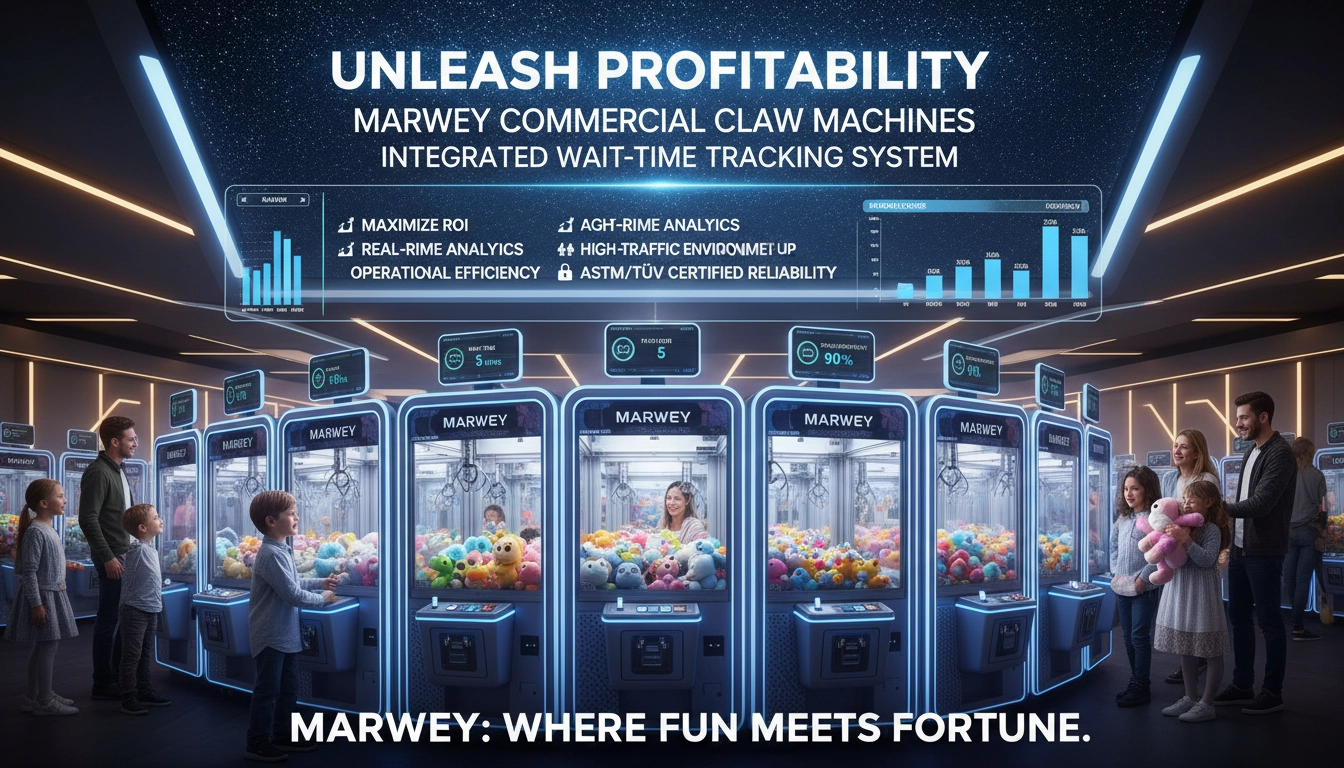
Implementing a System for Tracking Customer Wait Times at Popular Claw Machines.
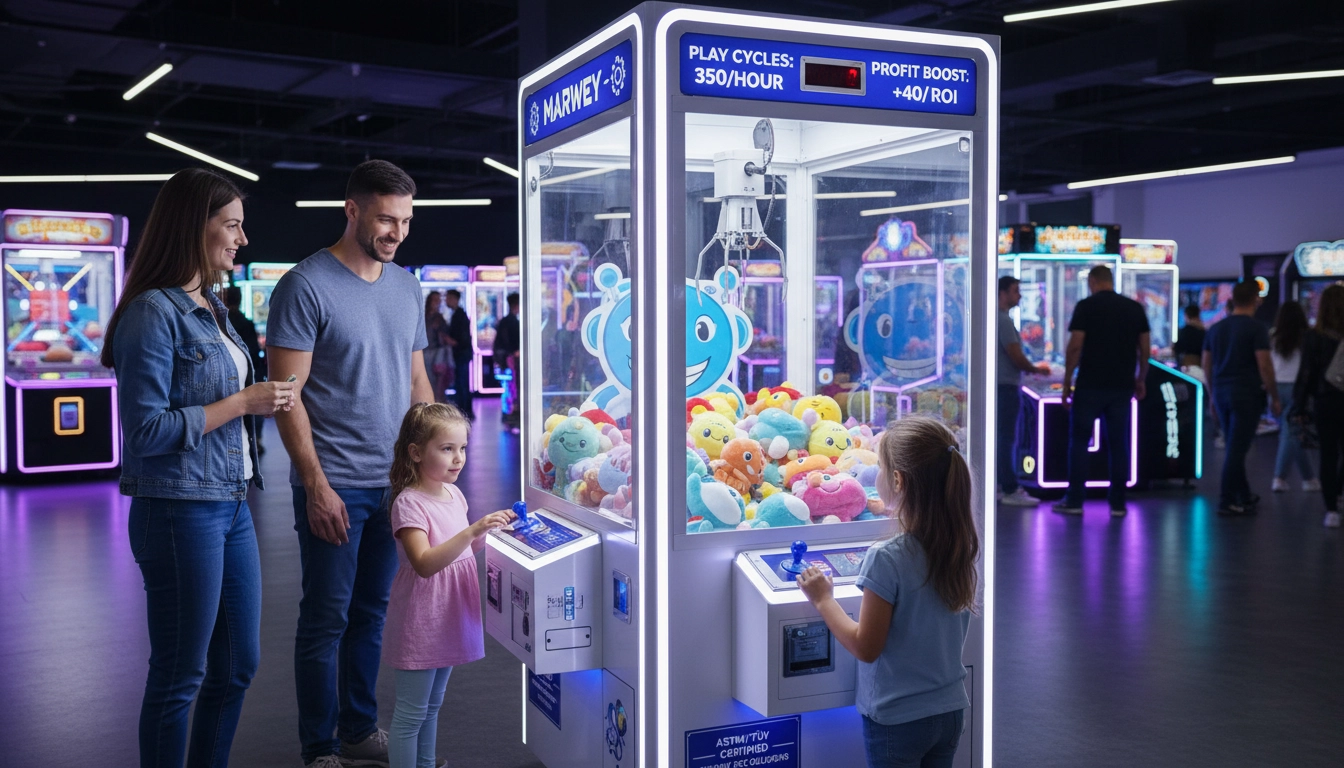
Boost Profits by Optimizing the Claw Machine Play Cycle for Maximum Throughput
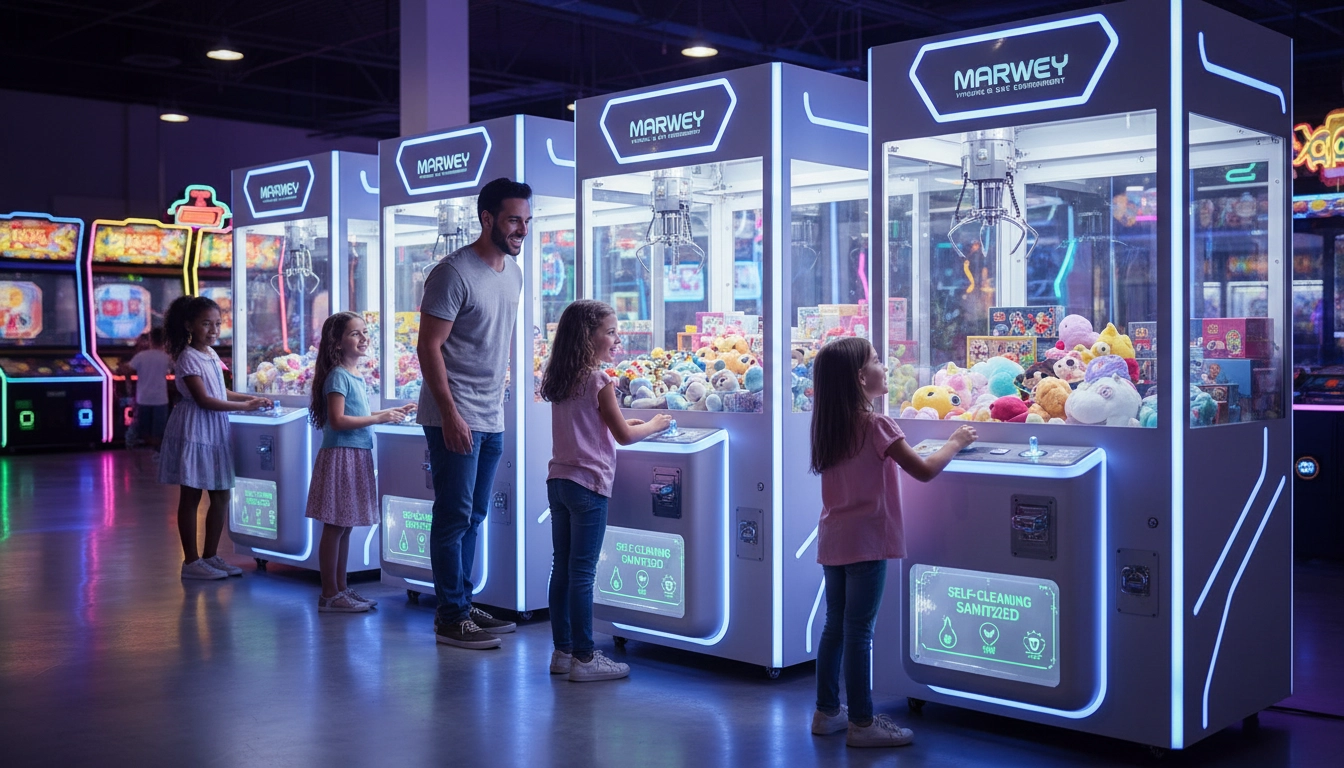
Innovate! Designing Claw Machines with Self-Cleaning and Sanitizing Features
Boost Claw Machine Conversions by Analyzing Player Behavior & Marketing Messages
Navigating Import Tariffs and Trade Agreements for Claw Machine Distribution
Setting Competitive Wholesale Pricing for Punching Machine Bulk Orders
Claw Machine
Skill play vs. win every time: What’s better?
-
Skill play claws attract dedicated gamers for repeat revenue, while "win every time" settings guarantee prizes for families using lower-cost toys and candies.
Family Entertainment Center
What is the biggest risk factor for a new FEC?
Aside from the financial risk of high initial investment, the biggest ongoing operational risk is liability and guest safety. This is closely followed by poor site selection—a hard-to-access or low-visibility location cripples foot traffic and marketing ROI regardless of attraction quality.
Photo Booth Machine
How big is the photo booth industry?
The Global Photo Booth Industry is Experiencing Rapid Growth
The photo booth market is a dynamic and expanding global sector, with its value already reaching hundreds of millions of dollars and projected to grow significantly over the next decade.
-
Current Market Value: In 2024, the global photo booth market was estimated to be valued around $624.09 million.
-
Strong Growth Trajectory: The industry is expected to continue its robust expansion, with Compound Annual Growth Rates (CAGR) generally forecasted to be between 9.6% and 14.62% through 2034. At this rate, the market value is projected to climb to nearly $2.5 billion.
This growth is being driven by several key factors:
-
High Demand for Entertainment: The largest segment of the market, accounting for approximately 68% of utilization, is for entertainment occasions like weddings, parties, festivals, and promotional events. Consumers are increasingly seeking interactive and personalized experiences.
-
Social Media Integration: Modern photo booths—especially open-air and mirror models—offer instant sharing features, allowing users to quickly upload photos to platforms like Instagram and TikTok. This caters directly to younger, social media-savvy consumers.
-
Technological Innovation: Growth is heavily fueled by new technology, including 360-degree photo booths, Augmented Reality (AR) filters, and AI features, which provide unique and engaging photo sessions.
-
Corporate Market: There is a significant rise in demand from the corporate sector, as businesses utilize photo booths for experiential marketing, brand activation, and employee/client engagement.
In essence, the photo booth has evolved from a simple coin-operated machine to a versatile, high-tech entertainment and marketing tool with substantial global economic impact.
Indoor Trampoline Park
How to start up a trampoline park business?
Starting a trampoline park is a major undertaking that requires significant planning, capital, and attention to safety and legal compliance. Here is a step-by-step guide on how to approach starting a trampoline park business:
1. Market Research and Business Concept
The foundation of your business is understanding your market and defining your unique offering.
- Target Market: Define your primary customer base. Is it families with young children, teenagers (for dodgeball/fitness), or corporate groups? This affects your park design and pricing.
- Competition Analysis: Research all direct (other trampoline parks) and indirect (bowling alleys, laser tag, indoor playgrounds) competitors in your region. Analyze their pricing, attractions, and what they do well or poorly.
- Unique Selling Proposition (USP): Determine how you will stand out. Will you focus on high-end attractions, a specialized theme, fitness classes, or superior party packages?
- Business Model: Decide between an Independent Park (full creative control, no royalties) or a Franchise (established brand, proven operations, but with fees and less flexibility).
2. Develop a Comprehensive Business Plan
This document is essential for securing financing and guiding your operation. It should include:
- Executive Summary: A brief overview of the entire plan.
- Company Description: Your mission, vision, and legal structure (LLC, Corporation, etc.).
- Market Analysis: Detailed findings from your research, including target audience and competitive landscape.
- Products & Services: Detailed list of all attractions (main court, dodgeball, ninja course, foam pit), party packages, concessions, and other revenue streams (fitness classes, merchandise).
- Management Team: Who will run the business and their relevant experience.
- Financial Plan:
- Startup Costs: Detailed estimates for equipment, building improvements, licenses, insurance, pre-opening marketing, and working capital (often $1.5 million to over $4 million total).
- Funding Strategy: How you will finance the park (SBA loans, investors, self-funding).
- Projections: 3-5 year financial forecasts (P&L, cash flow, break-even analysis).
3. Secure a Location and Facility
The property is one of the most critical factors for a trampoline park's success and safety.
- Size and Height: Look for a building with a large open floor plan. Industry guidelines often recommend a minimum of 18,000 - 20,000+ square feet and a clear ceiling height of at least 17 - 18 feet (5.2 - 5.5 meters) to accommodate safe jumping.
- Zoning: Confirm the location is properly zoned for a commercial family entertainment center/indoor recreational use. This is a common early hurdle.
- Accessibility: Choose a highly visible location with easy access, high traffic flow, and ample parking.
- Lease/Purchase: Secure the property with favorable lease terms or purchase the building.
4. Design and Equipment Procurement
This is where your vision is translated into a physical space.
- Professional Design: Work with experienced architects and a reputable trampoline park equipment manufacturer (like MARWEY) to create a safe, efficient, and engaging layout that maximizes jump area and minimizes congestion.
- Attraction Mix: Select a variety of attractions based on your target market (e.g., more ninja/warrior courses for teens, a dedicated toddler zone for families).
- Equipment Quality: Ensure all equipment is certified and meets international safety standards (e.g., those from the ASTM or the International Association of Trampoline Parks - IATP). Get multiple bids from suppliers.
5. Legal, Insurance, and Compliance
This is the most crucial step for risk management.
- Business Registration: Register your business entity and obtain an Employer Identification Number (EIN).
- Licensing & Permits: Obtain all required local and state licenses, including a General Business License, Zoning/Land Use Permits, and a Fire Safety Certificate. If you serve food, you will need Health Department permits.
- Liability Insurance: Trampoline parks are considered a high-risk business. Secure a robust commercial general liability insurance policy—this will be a significant ongoing expense.
- Waivers: Implement a mandatory, legally sound liability waiver system for all participants, which is essential for risk mitigation.
- Safety Protocols: Develop detailed safety rules, staff training programs, and emergency procedures.
6. Staffing and Operations
- Hiring: Recruit and hire your management team and court monitors. The court monitor is a critical role for safety.
- Training: Provide comprehensive training focused on emergency response, first aid, customer service, and enforcing safety rules.
- Technology: Implement a robust Point of Sale (POS) and ticketing system that can handle online bookings, waivers, scheduling, and tracking sales.
7. Marketing and Launch
- Pre-Launch Marketing: Build buzz by creating a website, social media presence, and local campaigns (press releases, local event sponsorships) months before opening.
- Pricing Strategy: Set prices for jump time, party packages, and concessions based on your cost analysis and competitor pricing.
- Grand Opening: Plan a large, well-publicized launch event to generate excitement and initial cash flow.
Mini Claw Machine
How does a mini claw machine work?
A mini claw machine operates through a simple electromechanical process:
-
Insert Coin/Token: The customer inserts money to activate the machine, which grants a set amount of play time (usually 10-30 seconds).
-
Movement: The player uses a joystick or buttons to move the claw over a desired prize.
-
Descent: The player presses a button to lower the claw. A motor drives the claw down into the prize chamber.
-
Gripping: When the claw reaches the bottom, it automatically closes. The grip strength is often pre-set and can be adjusted by the owner to control the difficulty.
-
Retrieval: The claw then rises, and if it has successfully grabbed a prize, it carries it to the chute (the prize drop area).
-
Release: The claw opens over the chute, dropping the prize for the customer to retrieve. The success of the grab is never guaranteed, which is a core part of the game's appeal and challenge.

Marwey One Stop Wholesale 4 Players VR Hunting Simulator Commercial Gun Shooting Arcade Game Console Equipment
Marwey One Stop Wholesale 4 Players VR Hunting Simulator Commercial Gun Shooting Arcade Game Console Equipment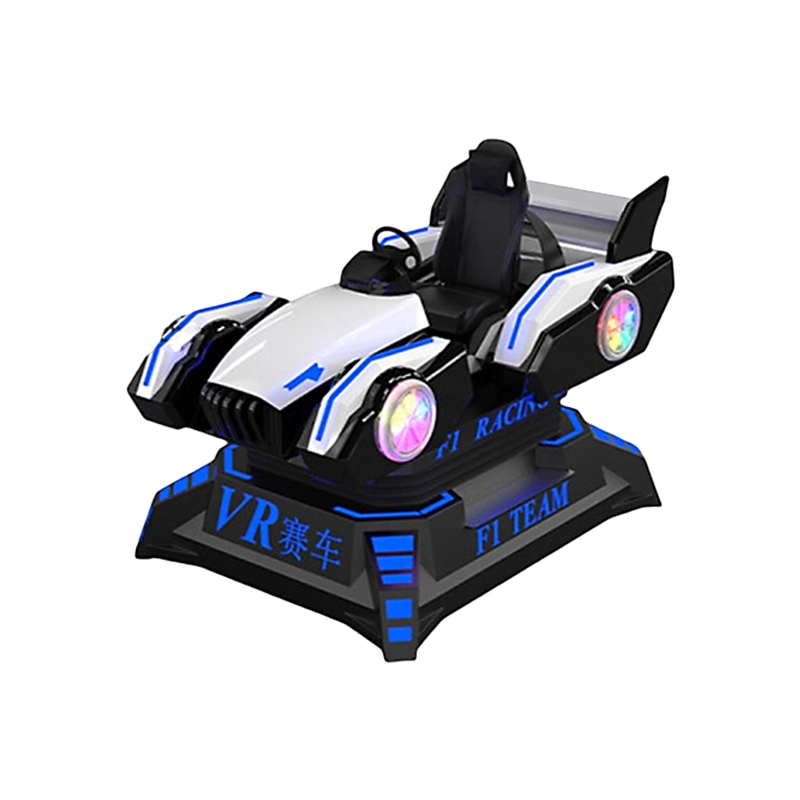
Marwey Hot Sale Vr 9d Racing Simulator Virtual Reality Driving Car Game Machine for Commercial Use
Marwey Hot Sale Vr 9d Racing Simulator Virtual Reality Driving Car Game Machine for Commercial Use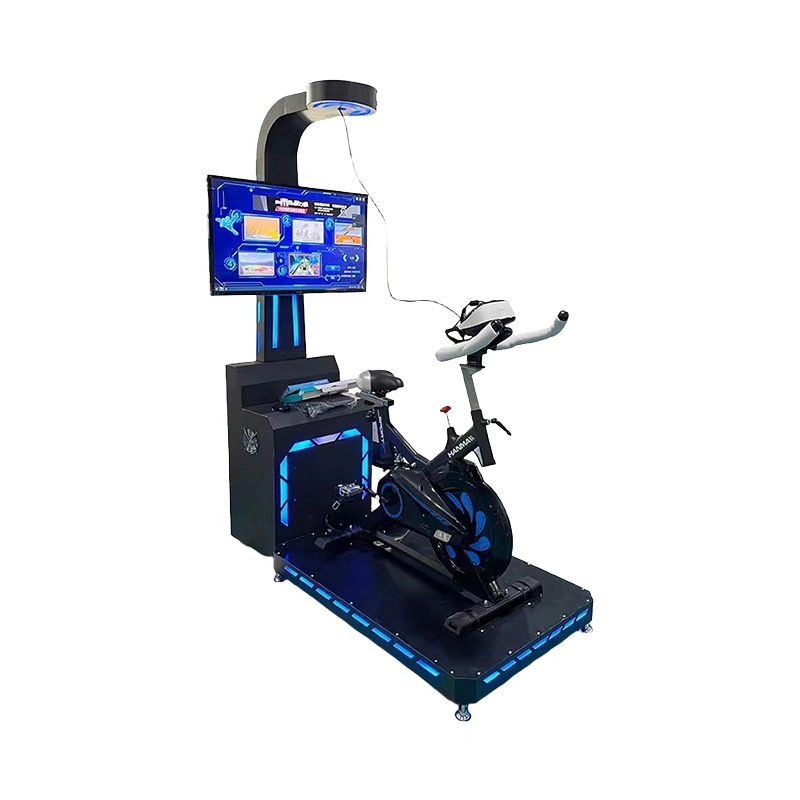
Marwey New Arrival Vr Dynamic Cycling Exercise & Driving Virtual Reality Bike Simulator for Cheap Sale
Marwey New Arrival Vr Dynamic Cycling Exercise & Driving Virtual Reality Bike Simulator for Cheap Sale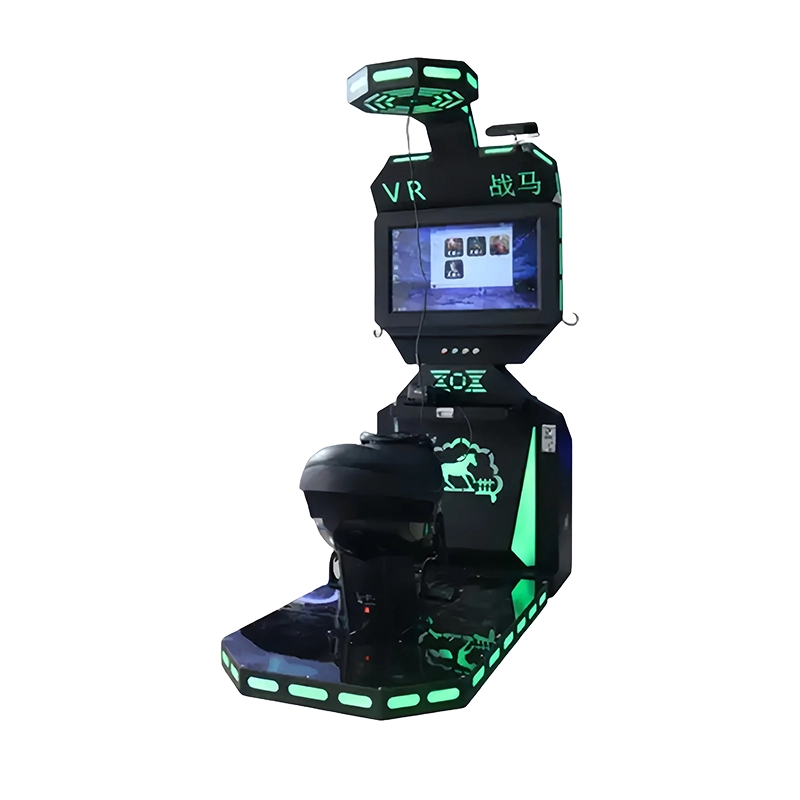
Marwey Mall New Arrival Vr Horse Simulator Indoor Commercial Virtual Reality Sport Game Machine for Sale
Marwey Mall New Arrival Vr Horse Simulator Indoor Commercial Virtual Reality Sport Game Machine for Sale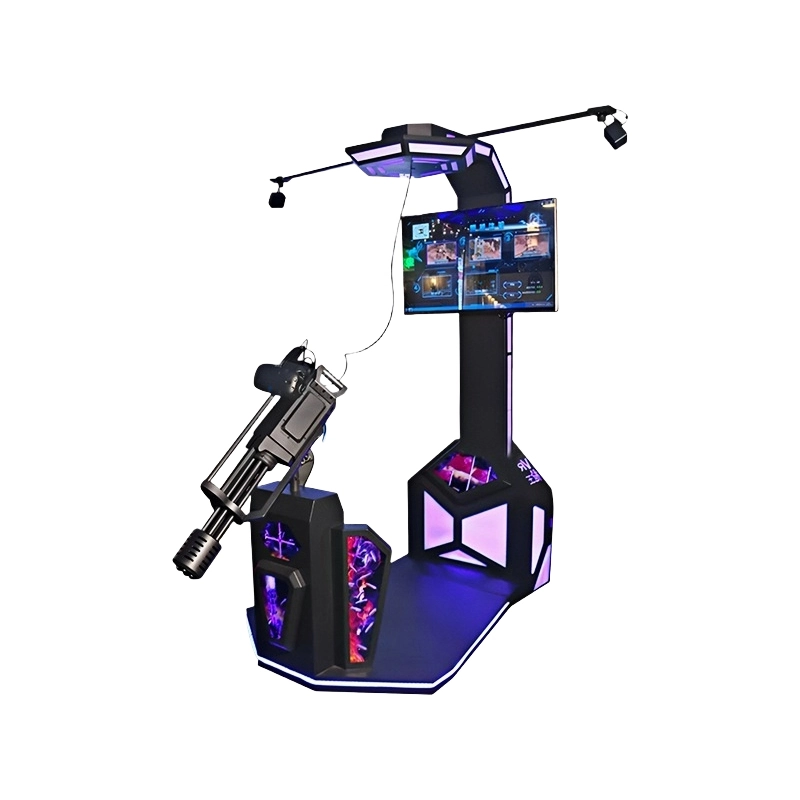
Marwey Hot Sale 1 Player Vr Gatling Shooting Simulator Virtual Reality Headset Glasses Gaming Machine
Marwey Hot Sale 1 Player Vr Gatling Shooting Simulator Virtual Reality Headset Glasses Gaming Machine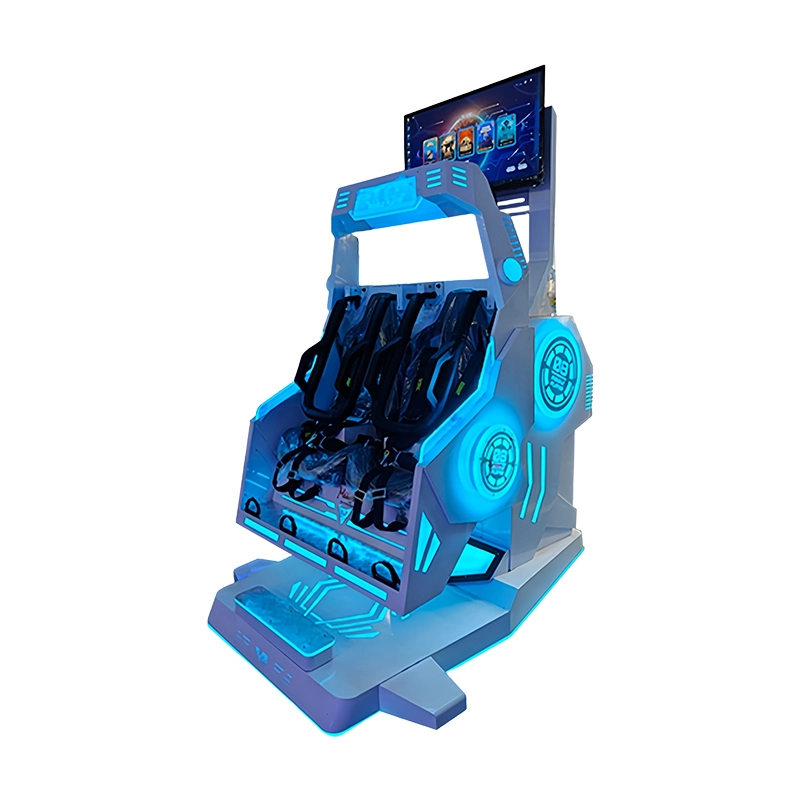
Marwey Commercial Two Player 360 Rotation Vr Simulator Virtual Reality Gaming Equipment for Hot Sale
Marwey Commercial Two Player 360 Rotation Vr Simulator Virtual Reality Gaming Equipment for Hot Sale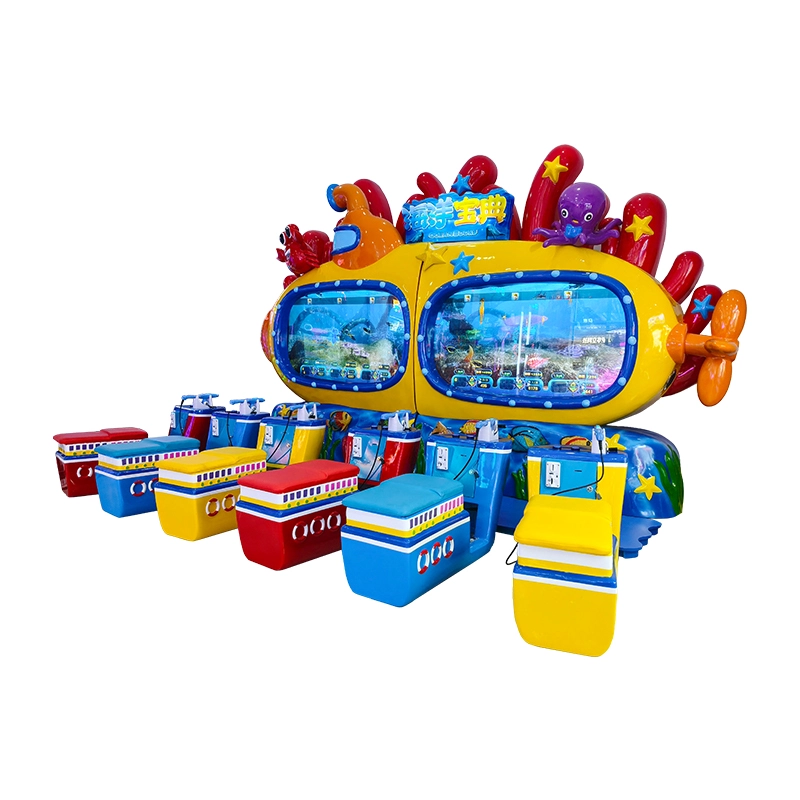
Marwey New High Quality Children's Arcade Redemption Game Machine - Hot Selling Indoor Amusement Fishing Simulation Equipment
Marwey New High Quality Children's Arcade Redemption Game Machine - Hot Selling Indoor Amusement Fishing Simulation Equipment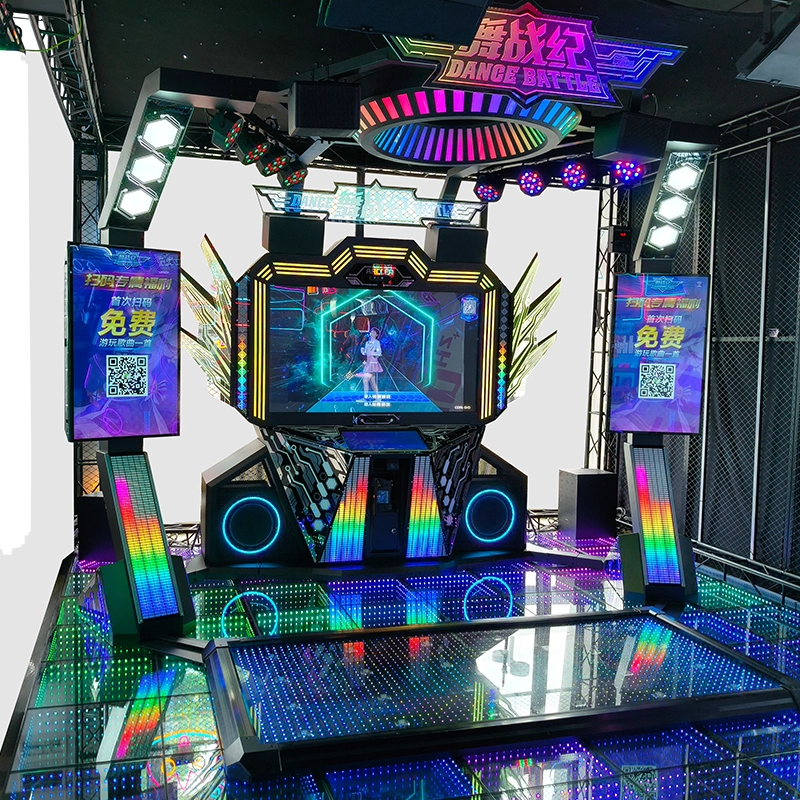
Marwey Coin Operated Indoor Arcade Dance Machine - High Quality Shopping Mall Entertainment Equipment for Sale
Marwey Coin Operated Indoor Arcade Dance Machine - High Quality Shopping Mall Entertainment Equipment for SaleWant to know more industry information?
If you have any comments or good suggestions, please leave us a message; later our professional staff will contact you as soon as possible.
◼ Contact MARWEY
WhatsApp: +86 189 2218 4260
Floor 2, Building E, Hengran Creative Park, Shixin Road, Panyu District, Guangzhou, Guangdong, China.
© 2025 MARWEY. All Rights Reserved.

MARWEY
MARWEY
MARWEY
MARWEY
MARWEY
MARWEY